Two exposures, and they leave different marks
La Jolla is the one place this studio serves where the water and the sun work on the same face all year, producing different signatures. The Cove has hosted an open-water swim since 1916 and a group swims there every morning regardless of season. Salt water strips the barrier with each session, and the rinse afterwards takes the oils that hold it together. The second exposure is on land: the blufftop above the Cove takes direct afternoon sun with no tree cover, and by the time the marine layer clears, the UV it was masking arrives with nothing left to soften it. That exposure never looks like a sunburn. It shows up years later as scattered flat spots across the forehead, cheekbones and nose.
Why the sequence matters more than the peel
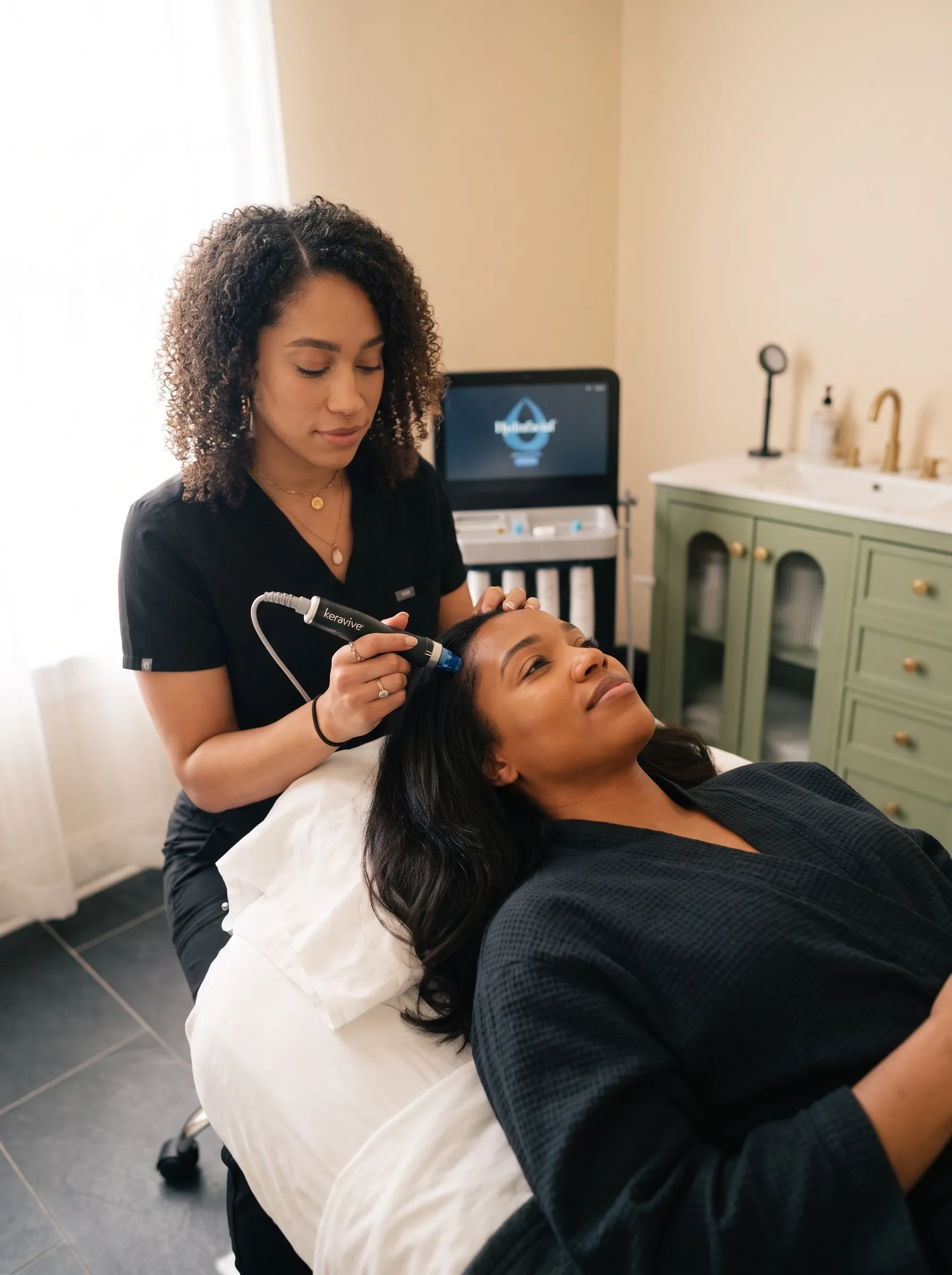
The most common reason a correction fails is choosing the treatment before working out what the mark actually is, and on La Jolla skin the mistake costs more: a reactive barrier flares at a strength a hydrated one absorbs, and the inflammation of that flare leaves a new mark. So the plan begins by stabilising the barrier with DMK Enzyme Therapy at $279 or a HydraFacial at $259, and only then escalates into LIRA chemical peels at $199 or $299. Where texture and scarring sit alongside the pigment, Procell microchanneling at $475 works mechanically, with no heat and no light. From La Jolla Village Drive, take I-5 south to the Washington Street exit and west to Reynard Way, where the treatment room is one room with free parking on site.